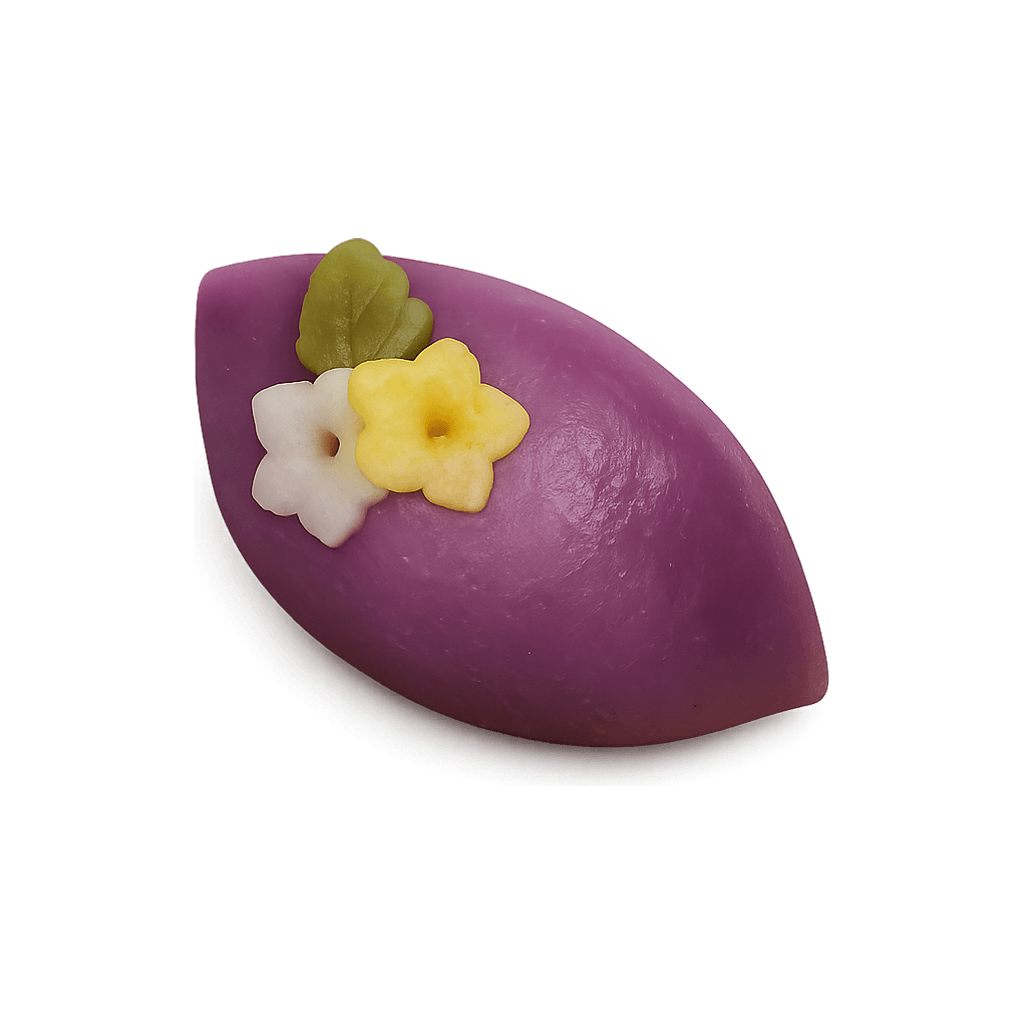
Songpyeon
송편
Half-moon rice cakes prepared for Chuseok. Its name refers to rice cakes steamed with pine needles. Families shape them together, and they are steamed over pine needles for fragrance.
About this dish
Songpyeon is closely associated with Chuseok, Korea's harvest holiday. Families shape filled rice cakes together; pine needles are a traditional steaming bed, though this sesame-filled adaptation uses a damp cloth.
Recipe
Sesame-filled songpyeon
Dough
- 360 g thawed Korean wet-milled non-glutinous rice flour (ssalgaru)
- 1/4 tsp salt
- 90-135 ml boiling water, as needed
Filling
- 60 g toasted sesame seeds, ground
- 40 g sugar
- 1 tbsp honey
- pinch of salt
Finish
- 2 tsp sesame oil
- 2 tsp neutral oil
- 1
Filling: 60 g toasted sesame seeds, ground; 40 g sugar; 1 tbsp honey; plus the remaining ingredients listed for this component. Mix filling ingredients into a crumbly, slightly cohesive paste. Mix until a pinch holds together and divide filling evenly.
- 2
Dough: 360 g thawed Korean wet-milled non-glutinous rice flour (ssalgaru); 1/4 tsp salt; 90-135 ml boiling water, as needed. Mix rice flour and salt. Add boiling water gradually, starting with 90 ml, and knead while warm to a smooth, pliable dough. The exact water depends on the flour moisture. Stir boiling water with a spoon first, knead once safe to touch and add final water only if the dough cracks. Keep covered.
- 3
Divide into 24. Form each into a thick cup, add a teaspoon of filling, close completely and shape into a plump half-moon. Keep the base thicker than the rim, pinch fully shut and smooth cracks with damp fingers.
- 4
Finish: 2 tsp sesame oil; 2 tsp neutral oil. Steam on a damp cloth over boiling water for 20 minutes. Dip briefly in cold water, drain and lightly coat with the mixed oils. Time from steady steam with gaps between pieces. Check a tender shell; cool briefly in clean water, drain and coat lightly with the mixed oils.
Note
Use wet-milled non-glutinous rice flour, not mochiko or dry supermarket rice flour. Pine needles are traditional but omitted here to avoid uncertain plant identification.