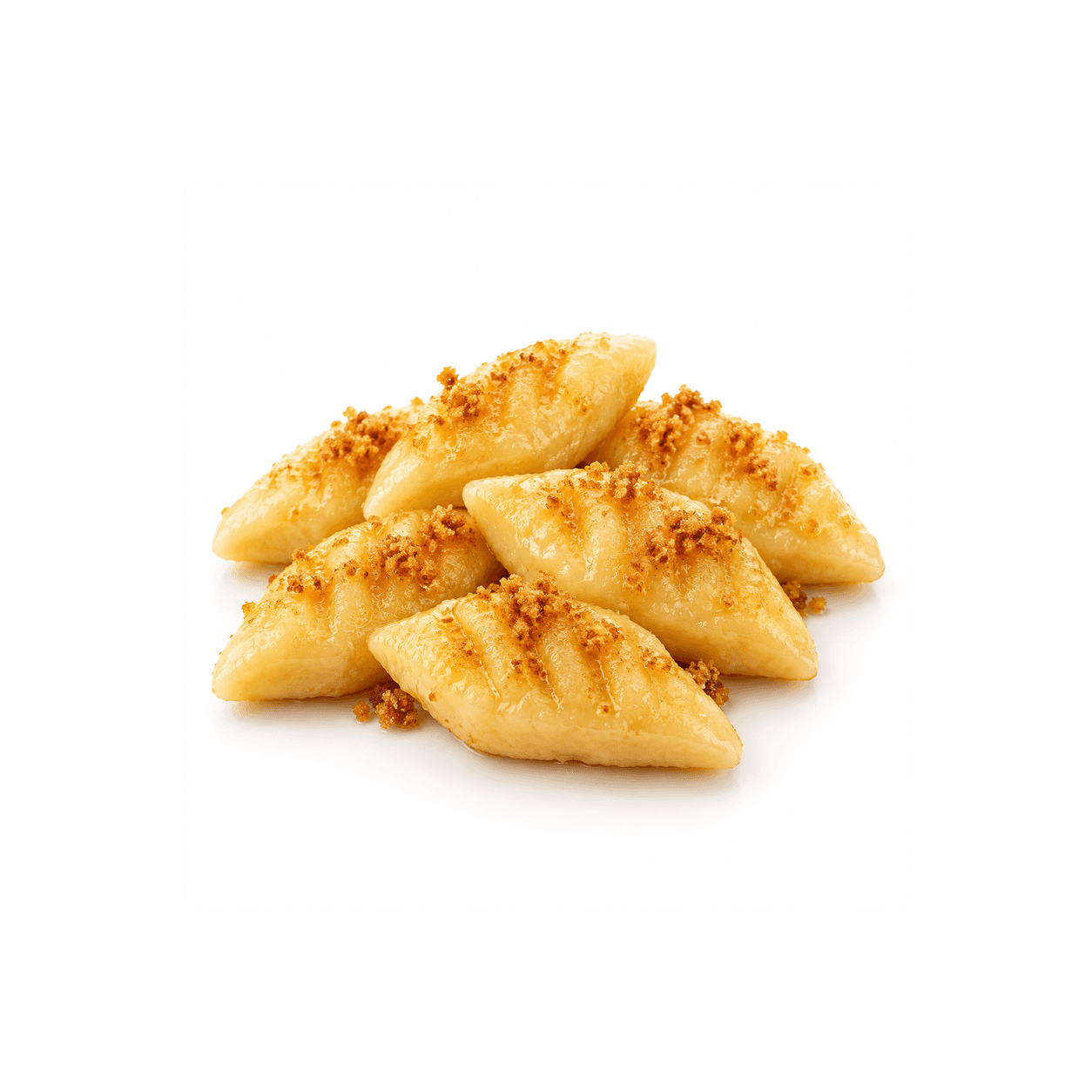
Kopytka
Polish potato dumplings
Small Polish potato dumplings named for their hoof-like shape, often served with butter, breadcrumbs, gravy, or meat. Its name means “little hooves,” referring to the dumplings’ shape.
About this dish
Small Polish potato dumplings named for their hoof-like shape, often served with butter, breadcrumbs, gravy, or meat. The recipe here chooses one named variation from that wider tradition; household fillings, shapes and serving styles may differ.
Recipe
Polish kopytka with buttered breadcrumbs
- 500 g cooked starchy potatoes, cooled and riced
- 150-180 g all-purpose flour
- 1 egg
- 1/2 tsp salt
Topping
- 40 g butter
- 30 g breadcrumbs
- 1/4 tsp black pepper
- 1
Use 500 g cooked starchy potatoes, cooled and riced; 150-180 g all-purpose flour; 1 egg and the listed remaining ingredients. Mix potatoes, egg and salt with 150 g flour. Fold together gently, adding only enough extra flour for a soft dough that can be rolled. Use smooth, cooled, well-drained potatoes; wet mash needs too much flour. Fold rather than knead vigorously. Stop adding flour as soon as the dough holds a rope; too much makes tough dumplings.
- 2
On a lightly floured surface, form 2 cm-thick ropes and cut diagonally into 2 cm pieces. Dust only lightly and roll with gentle pressure. Keep the pieces similar in size, separating them on a floured tray so they do not stick.
- 3
Boil in batches until floating, then simmer 3-4 minutes longer. Drain. Use a gentle bubble and add pieces separately. Floating starts the final cook; cut one to check a uniformly tender, not gluey or raw, center. Drain immediately rather than leaving them in hot water.
- 4
Topping: 40 g butter; 30 g breadcrumbs; 1/4 tsp black pepper. Brown breadcrumbs lightly in butter and toss with dumplings; add pepper. Use low to medium heat and stir the crumbs constantly. Stop at golden, not dark brown, and toss the drained dumplings gently so they keep their shape.
Note
Dry, cooled potatoes reduce flour needs. Excess kneading and flour make kopytka dense.