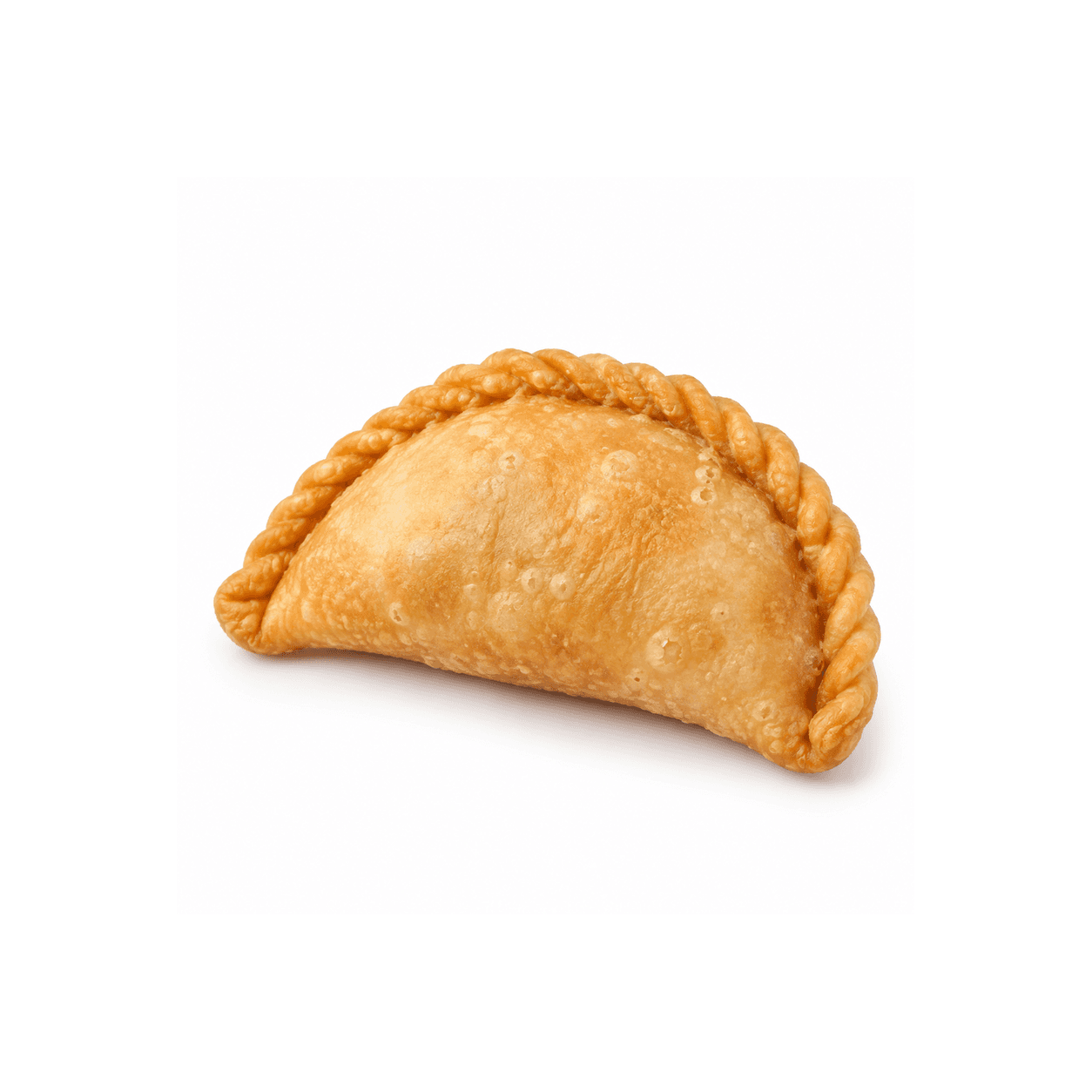
Gujiya / Karanji
गुजिया · करंजी · karanji
Crescent pastries filled with sweetened milk solids, coconut, or nuts. They are strongly associated with Holi and Diwali.
About this dish
Crescent pastries filled with sweetened milk solids, coconut, or nuts. They are strongly associated with Holi and Diwali. The recipe here chooses one named variation from that wider tradition; household fillings, shapes and serving styles may differ.
Recipe
North Indian khoya gujiya
Dough
- 250 g all-purpose flour
- 50 g melted ghee
- 100-115 ml water
- pinch of salt
Filling
- 200 g unsweetened khoya
- 70 g powdered sugar
- 30 g chopped almonds
- 20 g raisins
- 1/2 tsp ground cardamom
- 750 ml neutral oil for frying
- 1
Dough: 250 g all-purpose flour; 50 g melted ghee; 100-115 ml water; plus the remaining ingredients listed for this component. Rub ghee and salt into flour until sandy. Add water gradually to make a firm dough; cover and rest 30 minutes. Rub warm ghee through flour until a squeezed handful holds. Start with lower water and keep dough firm, not sticky.
- 2
Filling: 200 g unsweetened khoya; 70 g powdered sugar; 30 g chopped almonds; plus the remaining ingredients listed for this component. Cook khoya in a dry pan over low heat until fragrant and slightly golden; cool completely. Mix with sugar, almonds, raisins and cardamom. Break up khoya and scrape the pan so it does not scorch; add sugar only after cooling.
- 3
Divide dough into 16 and roll into 10 cm circles. Fill each with about 1 tbsp mixture, leaving the edge clear. Moisten lightly, fold into a crescent and crimp securely. Keep circles covered, leave rims clean and seal fully before crimping; leaked filling splashes in oil.
- 4
Fry in batches at 160-170°C/320-340°F for 6-8 minutes, turning until golden. Drain and cool before serving. Use a thermometer and a pan no more than half full. Fry small batches, check the inner pastry is cooked and cool the hot sugar filling briefly.
Note
This is khoya-filled gujiya, not the coconut-filled Maharashtrian karanji variation grouped under the same workbook row. Overfilling or sugar on the seam causes leaks.